
LIVESTREAMING YOU CAN RELY ON
Having delivered 10,000+ live hours, we provide corporate livestreaming that’s planned, tested, and run properly, so it works seamlessly alongside your event without becoming another thing you need to manage.
Livestreaming and Hybrid Production


20+ years of live broadcast experience
Livestreaming looks simple until something goes wrong. And when you're live, there's no second take.
Audio drops out. The stream buffers. The slides don't switch. Your CEO is on screen and nothing is working.
You need a team that's done this before. A lot.
Our team comes from network television. We've produced live news, live programming, and live events where failure wasn't an option.
We bring that same discipline to every livestream we deliver. Redundant systems. Backup connectivity. A technical director who's seen every problem before.
You get broadcast-quality production with corporate-friendly service. We show up prepared, we run the technical side, and you focus on your content and your audience.

LIVESTREAMING
Reach audiences beyond the room
Livestreaming allows people who can’t be there in person to see and hear the message as it’s delivered, not filtered through summaries or second-hand explanations. That immediacy matters when the message is important.
By communicating live, organisations remove doubt about what was said, how it was said, and the intent behind it. Livestreaming creates transparency, which significantly increases trust, particularly for dispersed teams, stakeholders, and partners.
When people see leadership speak in real time, respond naturally, and engage openly, it builds confidence. Livestreaming doesn’t just extend reach, it strengthens credibility by letting audiences witness the message for themselves, wherever they are.
-
Livestreaming is the live broadcast of an event, message, or announcement to people who can’t be in the room, allowing them to watch and hear it in real time. In a corporate context, livestreaming is used when the message matters and needs to be delivered clearly, consistently, and without delay.
Livestream production makes sense for town halls, leadership updates, conferences, announcements, and time-sensitive communications, particularly when audiences are spread across locations. Instead of relying on summaries or follow-up emails, livestreaming lets people see and hear the message exactly as it’s delivered.
-
Livestreaming benefits organisations by increasing transparency, clarity, and trust. When people see leadership communicate live, it removes doubt about what was said and how it was intended, which reduces confusion and speculation.
From a communications perspective, livestreaming production creates a single source of truth. It helps you deliver the message once, clearly, and confidently, rather than repeating or re-explaining it across teams, channels, or locations.
-
Livestreaming can be delivered across a range of platforms depending on who needs access and how controlled the audience needs to be. This includes internal platforms, private links, password-protected streams, unlisted streams, or public platforms when wider reach is required.
From a security perspective, professional livestreaming production is about choosing the right platform for the audience and message. We regularly deliver livestreams for government and large organisations where access control, privacy, and reliability are critical. That means using secure streams, controlled distribution, and platform settings that match the level of sensitivity, not default, one-size-fits-all solutions.
-
A professional livestream should feel calm, controlled, and dependable, not experimental or high-risk. That comes down to experience, preparation, and understanding what’s at stake when people are watching live.
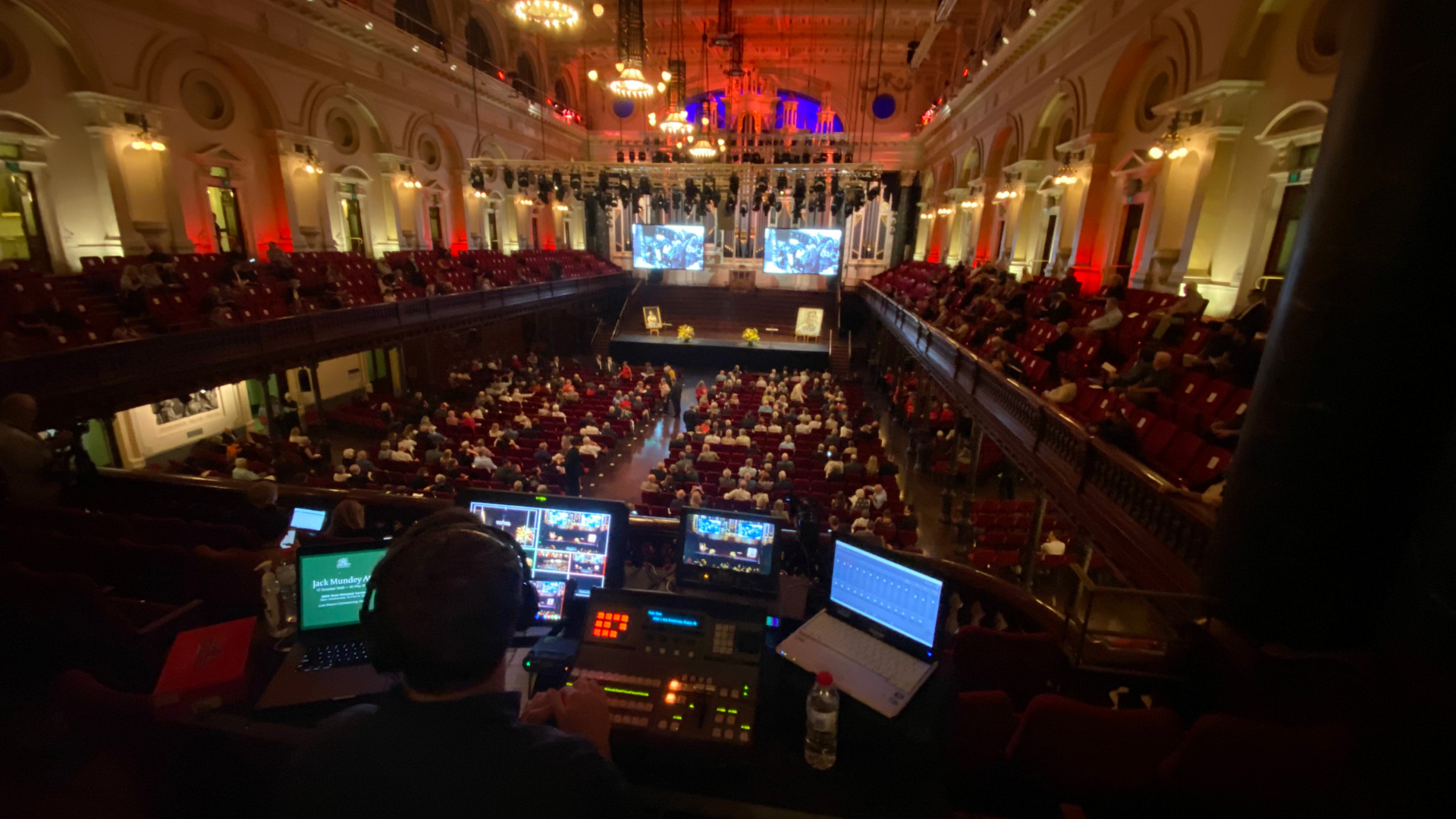
Our approach to livestreaming production is shaped by over 20 years working in television and media, and more than 10,000 hours of live broadcast experience. That background means we’re used to environments where there’s no second take, no margin for error, and everything has to work in real time.
Because of that experience, livestreaming is planned, tested, and run with broadcast-level discipline. The result is a livestream that feels credible and professional, integrates seamlessly with your event, and gives you confidence that it’s being handled properly, even under pressure.
-
Very little involvement is required on the day itself. The key input for livestreaming happens upfront, aligning on objectives, audiences, and how the livestream fits into the event.
Once that’s agreed, livestream production is handled alongside the event without needing your oversight. The aim is that livestreaming runs quietly in the background, so you’re not managing another moving part while everything else is happening.
-
This is where experience in livestream production matters most. Professional livestreaming plans for issues before they happen, rather than reacting in the moment.
Livestreaming production includes testing, redundancy, and backup systems so that if something fails, there’s a clear path forward. That preparation significantly reduces risk and gives you confidence that the livestream is being handled properly, even under pressure.
-
A livestream doesn’t end when the event finishes. Livestream production typically includes a clean recording that can be used on demand after the live moment has passed.
That recorded livestream can support internal communications, stakeholder updates, onboarding, or reference viewing, extending the value of the livestream without needing to run the event again. It turns a live moment into an ongoing communication asset.
-
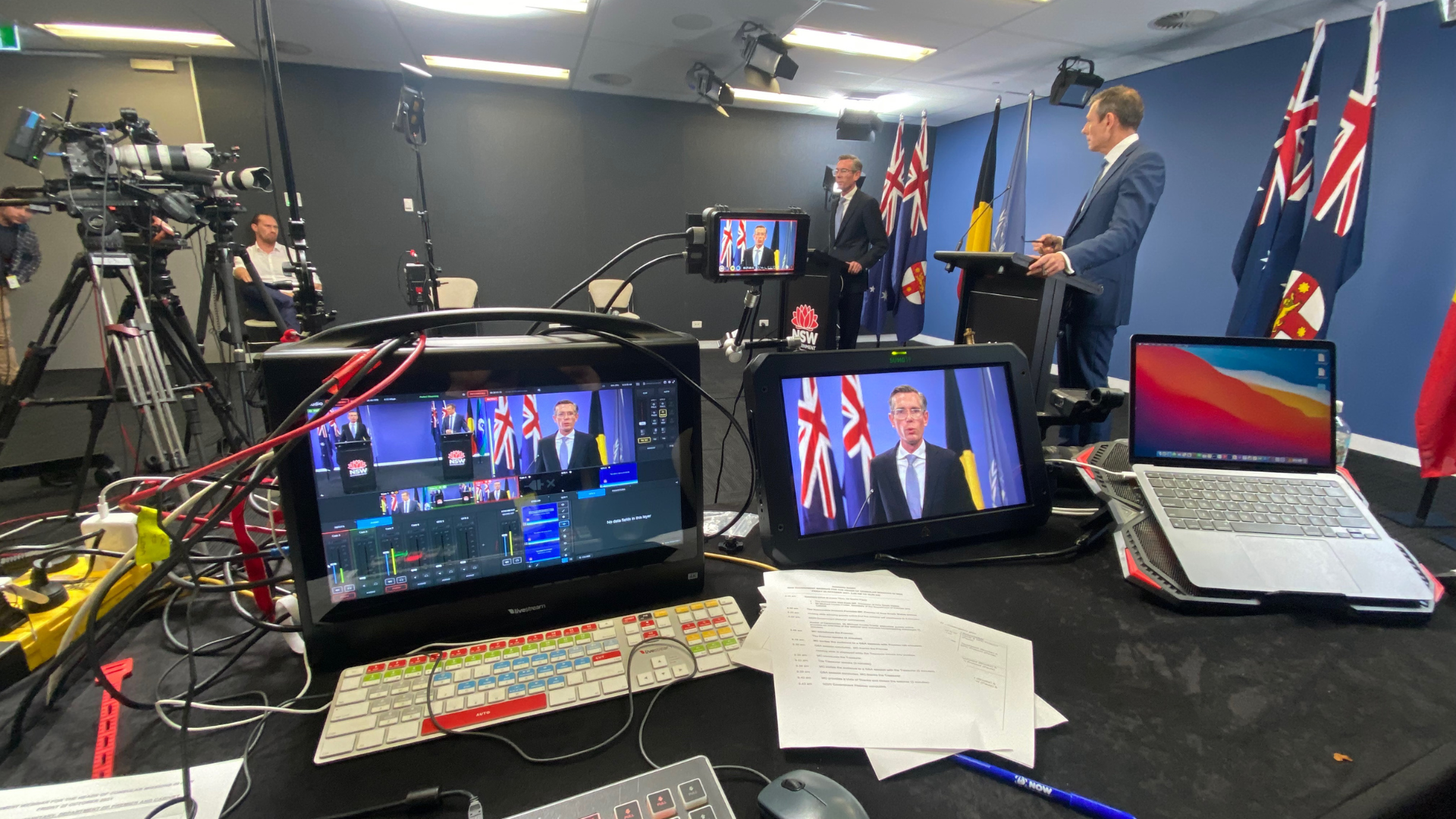
A single-camera livestream works well for simple updates, briefings, or presentations where the focus is one speaker and clarity is the priority. It’s clean, efficient, and keeps livestream production straightforward when the format doesn’t need variation.
Multi-camera livestreaming production is used when the event has more moving parts, multiple speakers, panel discussions, audience interaction, or a need to show both presenters and the room. Using multiple cameras with a live switcher allows the livestream to feel more considered and engaging, while still being controlled and professional. We recommend this approach when the livestream needs to reflect the importance of the event and hold attention over a longer period.
-
For livestreaming, audio matters more than video. Viewers will tolerate a less-than-perfect picture, but if the sound drops out, distorts, or is hard to understand, trust is lost immediately.
Professional livestreaming production prioritises audio from the start. That means using the right microphones for the room and speakers, managing mixing levels live, and building in redundancy so there’s always a backup signal. With our background in television and live broadcast, we approach livestream audio the same way broadcasters do, assuming it has to work first time, every time.
The result is a livestream where people can clearly hear what’s being said, stay engaged, and feel confident in the message, without you worrying about whether the sound will hold up once you go live.
★★★★★
“Oscar and his team provided us with all the necessary information as we needed it, which reassured us along the way that we could deliver a professional community of practice event to our stakeholders, regardless of whether they were in the room or on the other side of the planet.
Oscar is a clear communicator who takes the time to help us as the client understand what is and isn’t possible, whether that be a cost or technical constraint. This is crucial when we are trying to adapt our event design to the capacity of audio-visual and streaming technologies, and work within a budget.
I am also extremely confident of Oscar’s ability to source the necessary technical personnel to deliver on our requirements at a very high standard.”

Matthew Blakely
Communications and Engagement Officer
Transport for NSW

HYBRID EVENTS
One event with two audiences aligned
Hybrid events are about delivering the same message clearly to people in the room and those joining remotely, without one experience feeling secondary to the other.
We design and run hybrid events so both audiences stay aligned, engaged, and confident in what’s being communicated. The in-room experience is protected, the remote experience is intentional, and the event runs as one, not two separate things you have to manage.
-
A hybrid event is a single event designed for two audiences at the same time, people in the room and people joining remotely. It’s used when not everyone can attend in person, but the message still needs to land clearly and consistently.
Hybrid events make sense for town halls, conferences, leadership updates, and announcements where access, inclusion, or scale matters, without wanting to dilute the in-room experience.
-
Alignment comes from designing the event as one experience, not two separate ones.
In a well-run hybrid event, the message, timing, and intent are shared deliberately across both audiences. People joining remotely aren’t watching a second-hand feed, and people in the room aren’t distracted by technology. Both audiences receive the same message, delivered clearly and at the same time.
-
It shouldn’t and that’s a key concern we plan for.
A strong hybrid event protects the in-room experience first, while intentionally designing the remote experience alongside it. The room doesn’t become a studio, and speakers aren’t forced to perform for cameras. The event still feels like an event, not a broadcast.
-
Remote audiences feel included when they’re considered from the start, not added at the end.
That means clear audio, thoughtful camera placement, and moments where remote attendees can follow what’s happening without confusion. When done properly, people joining remotely feel connected to the room and confident they’re seeing and hearing what matters.
-
Hybrid events require planning for both audiences, including contingencies.
With the right experience and preparation, issues are anticipated and managed without disrupting the event. The goal is that neither audience feels the impact, and you don’t have to step in to solve problems in the moment.